Quadibyte
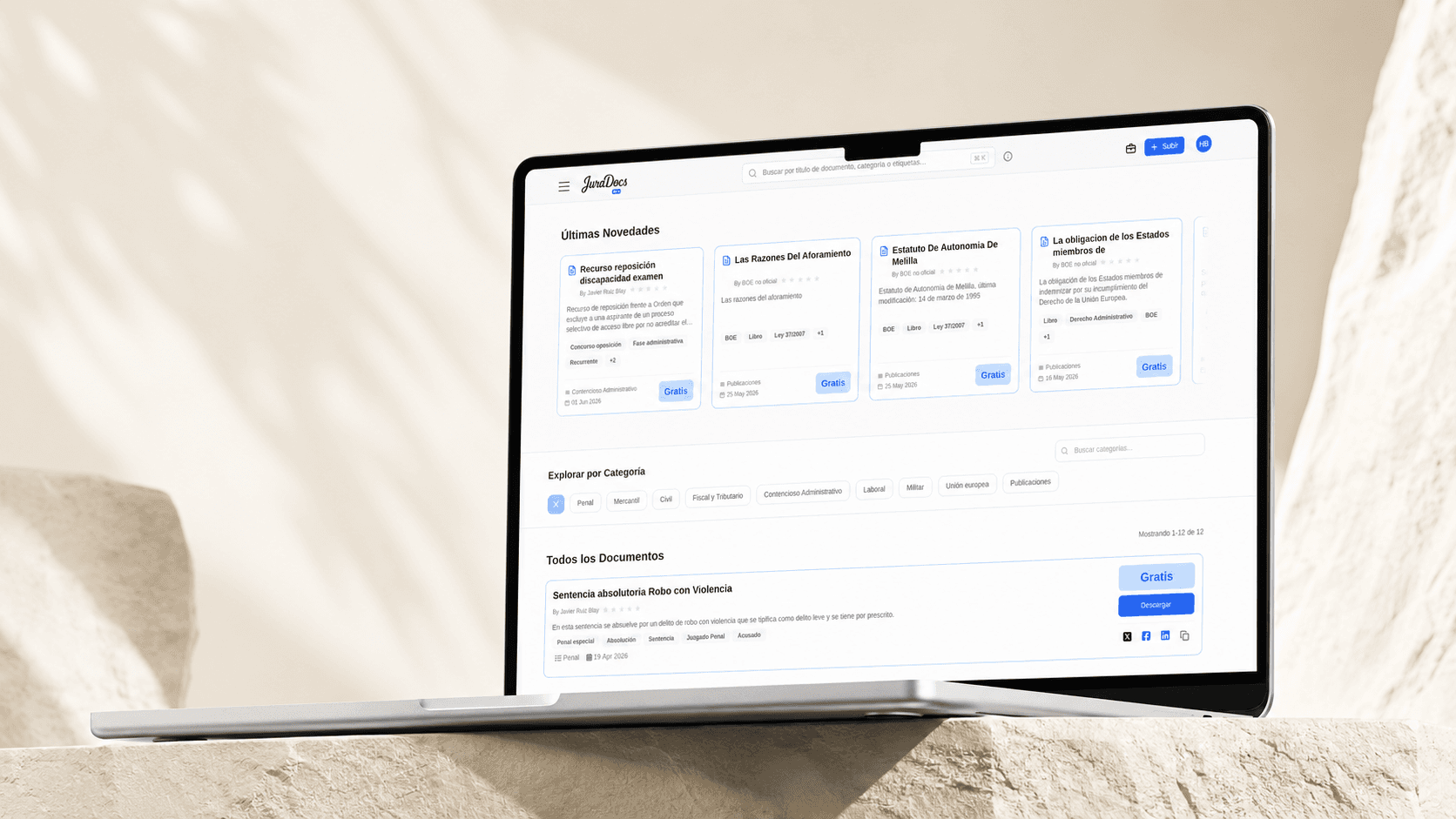
JuraDocs interface

Turning legal work that usually disappears into a trusted marketplace.

Javier Ruiz Blay knew the problem from legal practice. Lawyers build up libraries of briefs, appeals, lawsuits, and templates, then a lot of that work vanishes after one case. JuraDocs gives those documents a second life in a marketplace built for professionals, where trust is part of the workflow rather than something handled later.

JuraDocs brought the legal vision, product direction, brand, and domain context. QuadiByte built the product underneath: frontend, backend, document workflows, verification logic, payments, dashboards, and admin systems.

Legal work depends on documents, confidentiality, credentials, and judgment. JuraDocs had to be credible enough for practising lawyers to use publicly, careful enough to protect sensitive files, and structured enough to handle money, invoices, reviews, verification, and admin decisions without relying on manual checks forever.

Key outcomes

  • 01A professional marketplace where publishing is gated by verification and bar registry checks
  • 02Document processing that tracks anonymisation, PDF redaction, metadata extraction, and human review before publication
  • 03Marketplace payouts built to recover from failed or delayed payment events
  • 04Profession-based fees saved on each order so older payouts do not change when pricing changes
  • 05Post-launch work across payments, verification, anonymisation, deployment, search, and AI model workflows

The legal idea, documents, trust checks, and payments all had to work as one product.

01

JuraDocs was not built to sell random files.

Javier saw the problem in legal practice. Good briefs, appeals, lawsuits, and templates often get used once, then disappear. JuraDocs needed to turn that work into reusable professional assets without making the exchange feel casual.

02

A legal marketplace needs more than buying and selling.

Before a document could become public, the platform had to check the seller account, profession permissions, bar registry data, document readiness, payout setup, invoices, reviews, and admin controls.

03

The first build was only the start.

Once the marketplace worked, the next work was less glamorous and more important: payment recovery, seller-share retries, account moderation, anonymisation access, deployment structure, search quality, and model configuration.

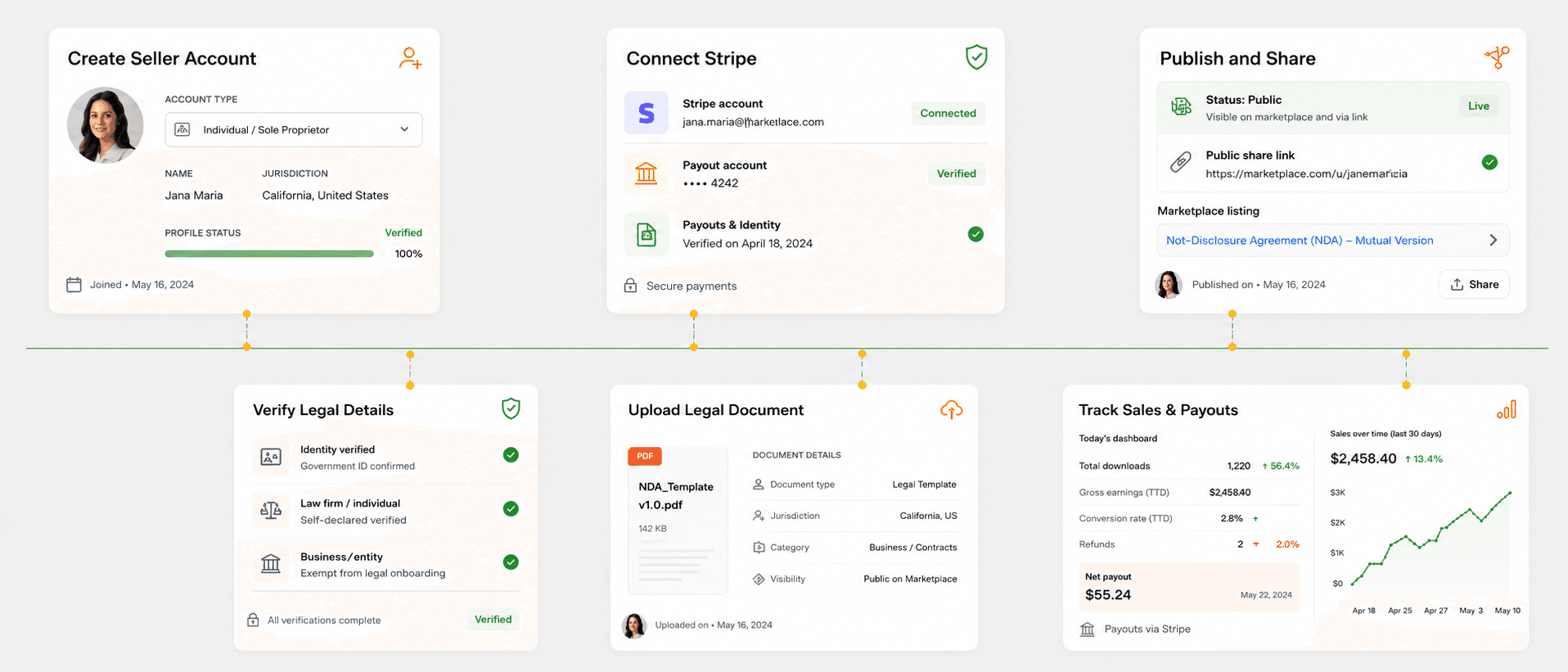
JuraDocs seller journey from account creation to payouts

Turning a single-store commerce engine into a legal marketplace.

We kept Medusa as the commerce backbone, then added the rules JuraDocs needed: seller ownership, document publishing, offers, reviews, fee snapshots, invoices, and payout state.

The hard part was not adding a vendor label to a product. Every order needed to know who owned the document, which profession rules applied, what fee was active at purchase time, and how settlement should recover when payment signals arrived late or failed.

  • Seller profiles tied to professional roles
  • Per-order fee snapshots for stable reconciliation
  • Stripe Connect payout state with retries and idempotency
Read how we rebuilt the commerce engineVerification gates, document processing, and payout workflows that recover cleanly.
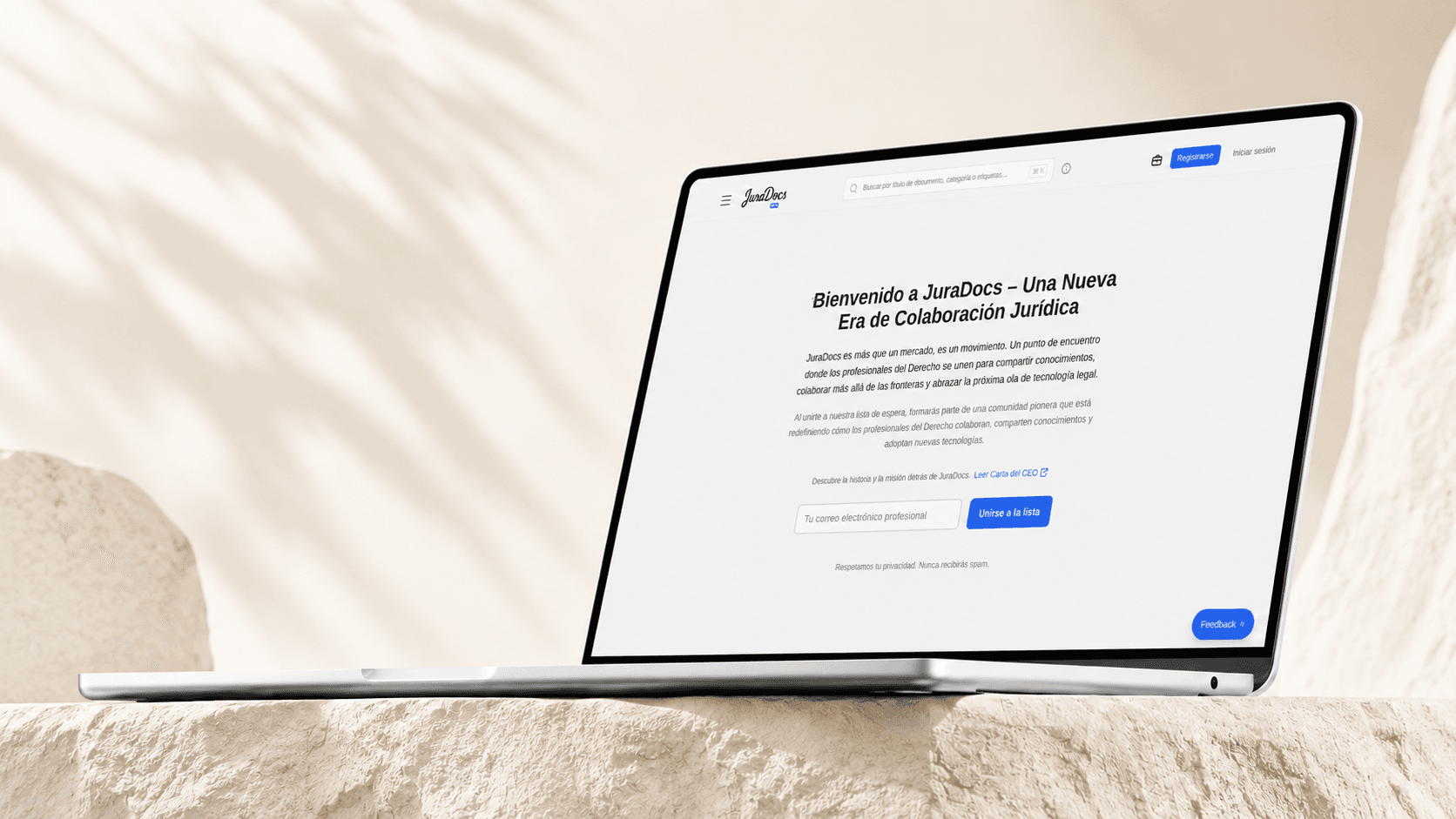
JuraDocs document marketplace product interface

A legal PDF had to become a listing someone could review.

The document work was heavy: anonymisation status, PDF redaction safeguards, structured legal metadata, and summaries that make a document searchable beyond its title.

We treated the model layer as infrastructure, not a demo. Processing runs through controlled workflows, progress is visible, and publication still depends on human review. The lawyer stays accountable for what goes live.

  • Anonymisation job tracking and redaction safeguards
  • Structured metadata extraction and summaries
  • Human review before public marketplace listing
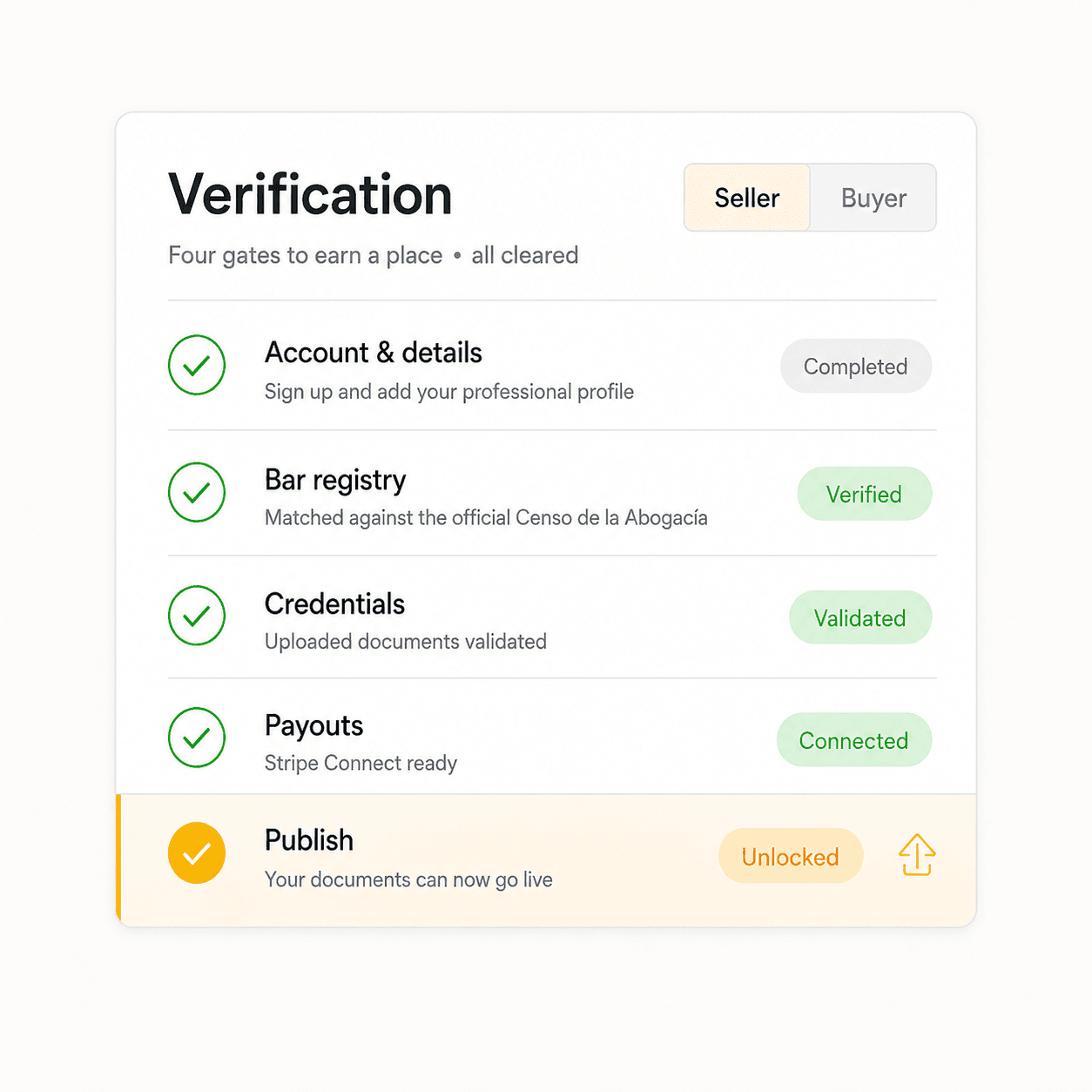
JuraDocs seller verification steps

Publishing only unlocks after the required checks.

For JuraDocs, trust is not a claim on a landing page. Sellers move through account details, profession permissions, registry checks, verification state, payout connection, and publishing readiness before documents can enter the marketplace.

That protects buyers and gives the platform a real quality bar. Public listings are tied to professionals who passed the required checks, not anonymous uploads.

  • Bar registry and credential checks
  • Seller and buyer permission boundaries
  • Publishing unlocked only after required gates clear
Discovery & Technical Scoping
Architecture & Data Model
Frontend & Backend Build
Trust, Payments & AI Integration
Ongoing Maintenance

Discovery & Architecture

The first phase turned Javier's product thesis into technical rules: who can publish, what needs checking, what happens to a sensitive PDF, and how money moves after a purchase.

The platform had to feel serious enough for practising lawyers and simple enough that sharing legal documents did not feel like extra admin work.

Platform Build

With JuraDocs' brand, product direction, and legal requirements in hand, we built the frontend, backend, and data model on MedusaJS.

Documents, verification, search, bids, purchases, invoices, and payouts had to work as one system. A buyer should not feel the seams between them.

Hardening after launch

After the core marketplace was live, the work moved into the details: payment idempotency, retries, account states, registry-match rules, anonymisation access, deployment, search, and model configuration.

JuraDocs was not shipped and left alone. It kept getting tightened as a platform people could actually operate.

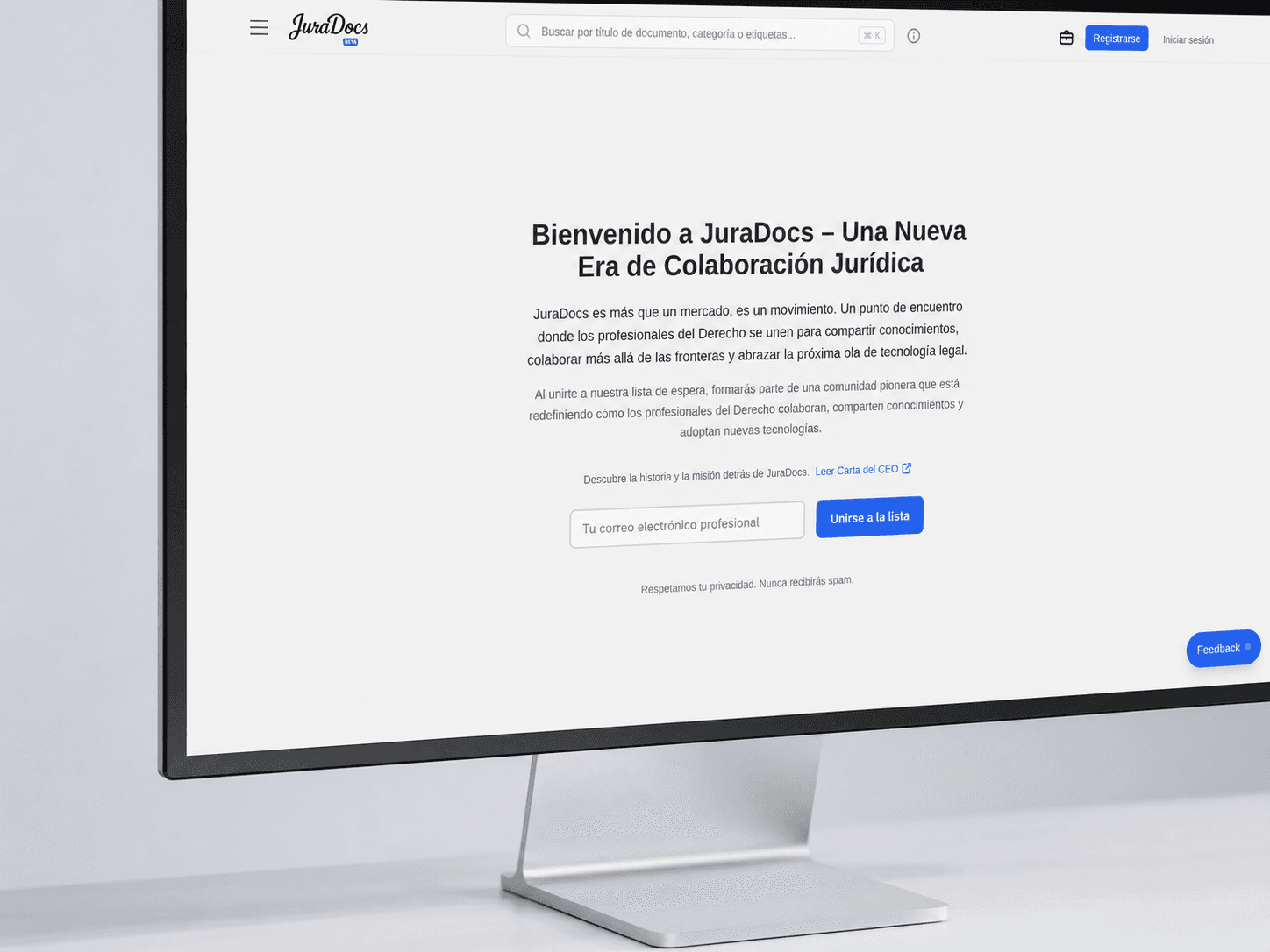
JuraDocs signed-out product screen
Next project
Turning Algeria's automotive trade into a governed multi-category marketplace.

Have a workflow like this?

Share the rough version and we will help identify the first useful build, the same way we approached this project.

Send the rough version